
Saturday, December 3, 2011
Mobile, Education and Healthcare : A Tale of Four Projects in Interaction Design (Jingtao Wang: Dec 2)

Advance Disclosure of Insider Trading in a Competitive Market (Stephen Lenkey: Dec 2)

Cloud Security: New Challenges, New Opportunities (Xiaofeng Wang: Nov 21)

Cloud computing is becoming a game-changer for the academia and industry that need low-cost and scalable data processing capabilities. However, this new computing paradigm is also fraught with security and privacy risks. Although many cloud-security issues are related to the problems that have long been studied, he strongly believes that distinctive features of the cloud actually expand the space of these seemingly old problems. He present the outcomes of their preliminary research in this new domain, which include new security threats they discovered in the cloud and a new cloud-based solution they developed for an existing security problem. Specifically, software in the cloud is often built through integrating web APIs provided by different web service providers, and served through delivering part of its components to the user’s browser. This Software-as-a-Service (SaaS) model can easily bring in logic flaws during API integrations, due to the miscommunication between the API provider and the API user, and is fundamentally vulnerable to side-channel attacks. As evidence to the seriousness of such problems, their research shows that high-profile web stores can be exploited to shop for free, and popular cloud-based web services are leaking out highly sensitive user information such as health records, family incomes and investment secrets. On the other hand, they demonstrate that the special features of the cloud can actually be leveraged to build surprisingly effective solutions to some old security problems: they developed a suite of new secure DNA alignment techniques based upon the hybrid infrastructure of today’s clouds and their immense data-processing capacity. Their new approach can support a large-scale genomic computation on the low-cost public cloud without endangering sensitive genetic information. These preliminary studies strongly indicate great security research opportunities existing in the cloud, which can lead to high-impact discoveries and surprising technological progress.
Green Navigation Services (Hassan Karimi: Nov 18)
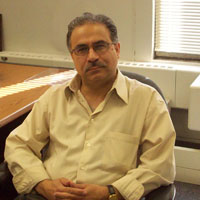
Users of navigation services routinely request shortest or fastest routes
for traveling from one location to another. This is because, at least for
most trips, users prefer to optimize their mobility. As navigation
services aim to address the problem of “getting lost”, especially in
unfamiliar environments, shortest and fastest routes attempt to address
the problem of “not getting there late”. The notion of “getting there
fast” provides a rationale for current navigation services to provide
shortest and fastest routes as default route choices. However, to date,
there is no study aimed at realizing the impacts of taking shortest or
fastest routes by many users in a geographic area over time on the
environment. He presented the concept of Green Navigation
Services and discussed the results of experiments conducted to address the
impacts of shortest and fastest routes commonly provided by current
navigation services on the environment.Healthier Together: Social Approaches to Health and Wellness (Paul Resnick: Nov 18)

Future Centered Design: Designing for Sustainable Business (Janaki Kumar: Oct 26)

She outlined the changing attitudes of business leaders towards sustainability and the opportunities this presents to product and information designers. Smart business leaders are beginning to understand the importance of sustainable practices to their success. They examined the key drivers for this mind shift.
Just as businesses have to reconsider the way they do business, designers have to re-think aspects of the way they design to participate fully in the creation of a sustainable world. They have to be prepared to rethink their design process, their materials, their product lifecycle, and their notion of customer experience.
Information designers and product designers have to work together to create the next generation of sustainability products. While product designers play a direct role, information designers play just an important role by gathering critical information across the enterprise and presenting them in a consumable way to allow decision makers to make informed sustainable choices.
The Next Generation of Facial Expression Recognition Systems (Michel Valstar: Oct 18)

The previous decade has seen a large number of publications on Automatic Facial Expression Recognition systems (AFERS). Also, recently the first AFERS programmes have been made available, either publicly by academics, or for sale by companies, making it clear for everyone what works and what doesn't. The first facial expression recognition challenge (FERA2011) further serves to shed a light on the efforts in this field, comparing many state of the art approaches on the same challenging dataset. What we now see is the advent of a second generation of AFERS. Building upon the successes of the first generation, these new systems attempt to tackle all the open challenges in this field by combining different approaches, as well as integrating sources of information other than the face (e.g. head actions). He described two recent developments towards such a second generation of AFERS, to wit the novel facial point detection algorithm Local Evidence Aggregation Regressors (LEAR) and a novel dynamic appearance descriptor called LPQ-TOP.
Friday, October 7, 2011
IP & Optical Transport Network Synergetic Protection & Dual Link Failure (Victor Yu Liu: 30 Sep)

Monday, September 26, 2011
Learning Classification With Auxiliary Probabilistic Information (Quang Nguyen: Sep 23)
Wednesday, September 21, 2011
Smart Grid Technologies (David Tipper: Sep 16)

Human-computer Interaction in Healthcare (Titus Schleyer: Sep 14)

Tuesday, September 13, 2011
Energy Efficient Networks (Gee Rittenhouse: Sep 9)

In this role, Gee is responsible for creating new growth opportunities by inventing technologies with disruptive impact. These responsibilities include the overall research portfolio from project inception through transfer to all parts of the Alcatel-Lucent business including the Solutions and Marketing organization, Product/Services groups, Applications Business Group, and internal ventures or technology licensing.
Gee is also actively engaged in green technology research and in generating innovations that promote environmental sustainability and he is the current Chairman of GreenTouchTM, an industry wide consortium whose goal is to improve the energy efficiency of ICT networks by a factor of 1000 from current levels.
Gee also fosters an open innovation model by developing research partnerships to effectively leverage Alcatel-Lucent’s knowledge with external partners. Prior to this, Gee headed the Bell Labs' Technology Integration Group, with the primary mission of taking Bell Labs research assets and innovations and driving them, through development activities and project management, into Alcatel-Lucent products and services. In this position, he was closely connected with all of Alcatel-Lucent's business divisions, interlocking their needs and strategies with Bell Labs' research activities, priorities, and innovations areas.
Subscribe to:
Posts (Atom)